By Jennifer Martin
Losing someone changes the shape of your days, and finding the right kind of help shouldn’t be one more thing you have to figure out alone. Community Hospice & Palliative Care provides bereavement support to families free of charge for up to 13 months after a death, one month longer than federal law requires of Medicare-certified hospices. That support includes individual and family grief counseling, support groups led by professional grief counselors, an educational workshop called Understanding Grief, and Camp Healing Powers®, a therapeutic camp for grieving children ages 7 to 17. Select services, including the Understanding Grief workshop, are also open to community members who were never a Community Hospice patient. No one is ever denied services through Community Hospice, regardless of their ability to pay. To start, call 866-253-6681.
This page covers what’s included, who qualifies, and what happens when you call. If you’re looking for grief support after a death (not information about employer bereavement leave), you’re in the right place.
What Community Hospice’s Bereavement Program Includes
Bereavement support at Community Hospice is a structured, professionally led program, not a pamphlet with a few coping tips. Every hospice family is offered organized, individualized help for up to 13 months after their loved one dies, free of charge.
Federal law sets a floor for this. Medicare-certified hospices are required to make bereavement services available to families for at least 12 months following a death. Community Hospice exceeds that requirement by an extra month, and every service in that window comes at no cost to the family.
The program is run by professional grief counselors, people trained and experienced in grief and loss, not volunteers filling in a gap. That’s a federal requirement for hospice bereavement programs, and it shows: your plan gets built around what you actually need, on a schedule that fits your family instead of a generic checklist.
That’s the core distinction between Community Hospice’s bereavement program and the informal comfort of friends, family, or clergy. Those relationships matter and they help. But a hospice bereavement program is planned, professionally supervised, and built specifically around your situation. For the fuller picture of everything included, Community Hospice’s grief support services page walks through the complete program.
Types of Grief Support Available
Grief doesn’t look the same for every person or every family, so the program isn’t one-size-fits-all. Here’s what’s available.
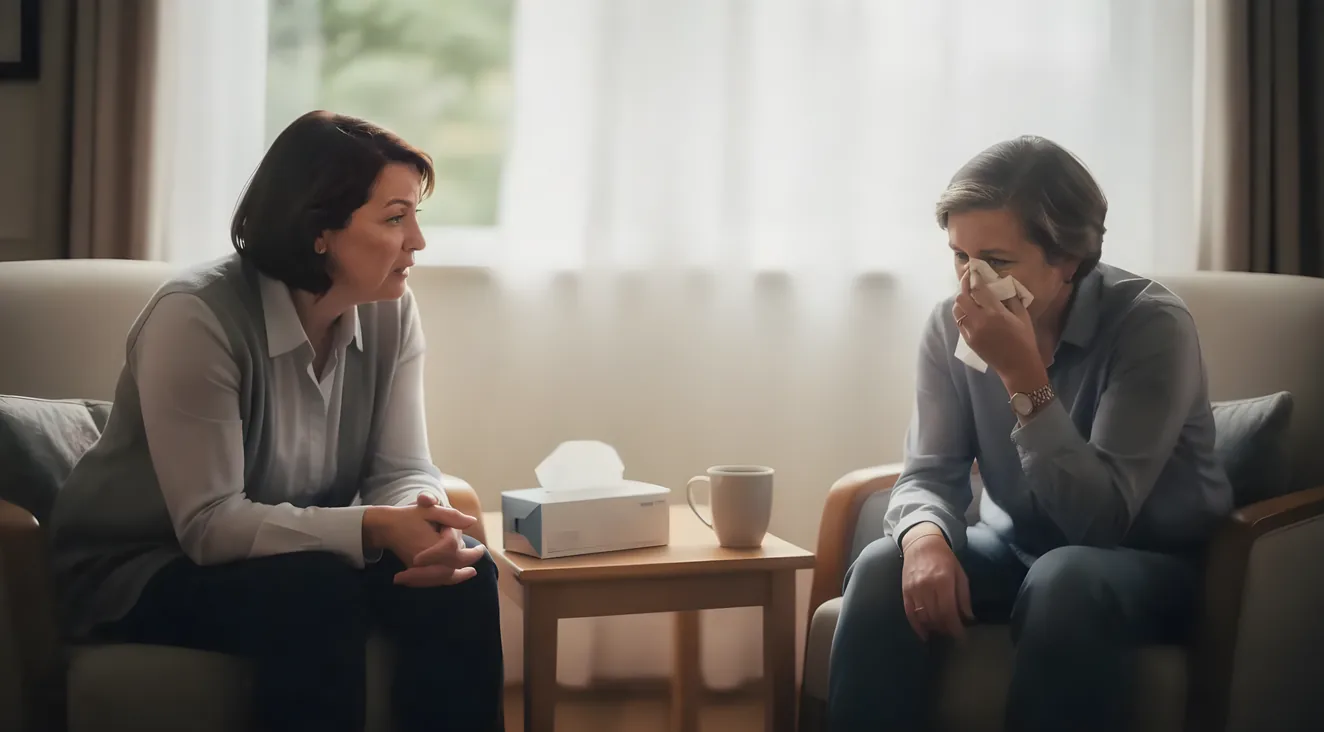
Individual and family counseling gives you one-on-one time with a bereavement counselor, or sessions that include your whole family when grief is affecting everyone under one roof differently. Some people want to talk it through privately. Others need the whole family in the room at once. Both are options.
Community Hospice’s grief support groups meet during the day and in the evening, led by professional grief counselors rather than a rotating cast of volunteers. Sitting in a room with other people who understand what you’re carrying, without having to explain yourself from scratch, is its own kind of relief.
The Understanding Grief workshop is a free, in-person session open to any adult 18 or older who has recently lost someone, whether or not that person was ever a Community Hospice patient. The workshop is designed to be most helpful within the first 90 days after a loss, when everything still feels raw and unfamiliar. Registration runs through a separate line: call 904-407-7001 to sign up.
For grieving children ages 7 to 17, Camp Healing Powers® is a therapeutic camp that combines peer connection with age-appropriate coping tools. Kids grieve differently than adults do, often through behavior rather than words, and this camp gives them space built specifically for that.
Phone check-ins are also part of the picture. They’re a standard part of each family’s individualized plan, a way of staying connected without requiring you to reach out first on the days that feel hardest.
Who Can Get Bereavement Support Through Community Hospice
If your family member was a Community Hospice patient, bereavement support is automatic, included at no cost for up to 13 months after their death, and you don’t need to apply or qualify for it separately.
Select services are also offered to the wider community at no cost, meaning you don’t need a connection to a Community Hospice patient to use them. The clearest example is the Understanding Grief workshop, explicitly open to any adult 18 or older who has recently experienced a loss, hospice family or not.
Whatever your situation, cost should never be the reason you don’t reach out. No one is ever denied services through Community Hospice, regardless of their ability to pay.
How to Start: Your First Call
Getting started is one phone call. For most bereavement services, call 866-253-6681. If you specifically want to register for the Understanding Grief workshop, that’s a separate line: 904-407-7001.
The first call is about understanding your situation, not filling out paperwork. You’ll talk through what happened, who you lost, and what kind of support sounds right to you right now, whether that’s individual counseling, a support group, the workshop, or something else. From there, Community Hospice matches you with the right starting point.
You don’t need to have the right words ready, and you don’t need to know exactly what kind of help you want before you call. That’s part of what the first conversation is for.
When Grief Becomes Something More
Most people don’t need formal bereavement support to get through grief. About 66.4% of adults have recovered from their grief by the one-year mark, carried through by their own coping and the people around them. If that’s where you are, that’s normal, and it doesn’t mean you’re grieving wrong or that something is missing.
For a smaller group, roughly 7 to 10% of the bereaved, grief doesn’t ease with time. It stays intense, persistent, and disruptive to daily life well beyond what’s typical. In March 2022, the medical field gave this a formal name: Prolonged Grief Disorder (PGD), now recognized in the DSM-5-TR. Having a name for it doesn’t mean something is wrong with you. PGD is a real, recognized condition, and real, effective help exists for it.
Grief also doesn’t move through a tidy sequence of stages the way the classic five-stages model suggests. It moves in waves, often intensifying again around anniversaries, birthdays, and holidays (grief during the holidays is its own particular weight, one worth its own conversation). If you notice grief spiking back up months after you thought you’d moved past the worst of it, that’s common, not a setback.
Only about 10% of people with PGD ever access formal support, even though most who need it want it. Reaching out isn’t overreacting. It’s closing a gap that a lot of people fall into simply because no one told them help exists.
Grief vs. Depression: Knowing the Difference
Grief and depression can look similar from the outside, and it’s worth understanding the difference, without trying to diagnose yourself from a list.
Grief tends to come in waves. You can feel completely leveled by loss one moment and find yourself laughing at a memory the next. Your sense of who you are generally stays intact. Grief comes from what you lost. It says nothing about who you are.
Depression tends to be more constant. It often brings a persistent sense of hopelessness or an inability to feel pleasure that isn’t tied to the loss itself, more of a flat, unrelenting weight than a wave that comes and goes.
The two can overlap, and even trained professionals find that distinction difficult at times, so this isn’t something to sort out with a checklist. If you’re having thoughts of harming yourself, if you can’t function in daily life for a stretch that feels too long, or if nothing has eased months past what feels reasonable, that’s worth a conversation with someone qualified to help. Community Hospice’s grief counselors are trained to have that conversation with you.
Why Families Trust Community Hospice for Grief Support
Community Hospice has supported families across northeast and north central Florida for 47 years, caring for about 1,500 patients a day across 16 counties. That kind of reach means the bereavement program is a real, staffed, ongoing part of how Community Hospice cares for families, both before and after a death, not a small side offering.
The recognition as a Hospice Honors Elite program places Community Hospice among the top 2% of hospices nationwide, and we are honored to be the only hospice in the state of Florida to receive this designation, a testament to the exceptional quality and heartfelt care our team delivers each day.
Bereavement support is one part of a broader continuum of care. Families who work with Community Hospice for hospice or palliative care carry that same relationship forward into grief support, rather than starting over with someone new. To see the full range of care Community Hospice provides, from hospice and palliative care through bereavement, the services overview covers all of it.
Frequently Asked Questions
What is bereavement support?
Bereavement support is structured, professionally led help for people grieving a death, different from the informal support of friends and family. At Community Hospice, that includes counseling, support groups, and educational workshops, all built around your specific situation.
How long does bereavement support last at Community Hospice?
Community Hospice offers bereavement services free of charge to hospice families for up to 13 months after a loved one’s death, one month longer than the 12-month minimum federal regulations require.
Is bereavement support free?
Yes, for hospice families, for up to 13 months. Select services, including the Understanding Grief workshop, are also offered to the wider community at no cost.
Do I have to be a hospice patient to get grief support from Community Hospice?
Not for every service. The Understanding Grief workshop is open to any adult 18 or older who has recently experienced a loss, whether or not they were a Community Hospice patient. No one is ever denied services through Community Hospice, regardless of their ability to pay.
What happens at a Community Hospice grief support group?
Community Hospice’s grief support groups meet during the day or in the evening and are led by professional grief counselors, not volunteers, giving participants a structured space to process loss alongside others going through something similar.
When should I seek grief counseling instead of relying on family and friends?
There’s no single moment that means you should call. But if grief feels unrelenting rather than easing with time, or if it’s interfering with daily life well beyond a year, that pattern can point to Prolonged Grief Disorder, which affects roughly 7 to 10% of bereaved adults.
What is the difference between grief and depression?
Grief tends to come in waves, and your sense of self generally stays intact. Depression is more constant and often includes a persistent hopelessness that isn’t tied to the loss itself. The two can overlap, so it’s worth talking to a professional instead of trying to sort it out alone.
Are grief and bereavement the same thing?
Not exactly. Bereavement is the state of having lost someone to death. Grief is the emotional and physical response to that loss.
How do I help a grieving friend or family member?
Offer something specific: a meal, a ride, sitting with them in silence, rather than a vague “let me know if you need anything.” And let them talk about the person they lost instead of steering the conversation away from it.
Next Steps for Your Family
If you or someone you love is grieving, reach out even if you don’t know yet what kind of help sounds right. Call Community Hospice’s bereavement team at 866-253-6681, or call 904-407-7001 to register for the Understanding Grief workshop. For more detail on what’s included, Community Hospice’s grief support services page has the full picture.
Grief takes as long as it takes. But you don’t have to carry it alone, and support is available whether or not you’re ready to call today, tomorrow, or three months from now.

Jennifer Martin
As the director of psychosocial, bereavement & community grief at Community Hospice & Palliative Care, Jennifer oversees a department of social work staff, bereavement counselors, music therapy and child life services. She represents the social work, counseling, music therapy and child life disciplines on varying committees, task forces, and policy groups, ensuring the highest quality care for the patients and families of northeast Florida. Jennifer is a licensed clinical social worker, qualified clinical supervisor, and is certified as an advanced social work case manager and advanced hospice and palliative social worker. She earned her Bachelor of Science in social work and a Master of Social Work from Florida State University. Jennifer has been employed with Community Hospice & Palliative Care since 2004. Prior work experiences include working as a social work case manager for the US Navy (contractor), working in an outpatient dialysis clinic setting, skilled and long-term care settings, and acute hospital settings across many clinical specialties.